
From April 28–30 in Brussels, OneNext 2026: Re:Virtualize brought together industry leaders, partners, customers, and the OpenNebula Systems team for three days of hands-on learning, strategic discussions, and forward-looking innovation.
The event delivered on its promise: positioning OpenNebula at the center of the transition toward sovereign enterprise cloud and AI-ready infrastructure while reinforcing its role as a practical alternative to legacy virtualization platforms.
Day 1: From Theory to Practice
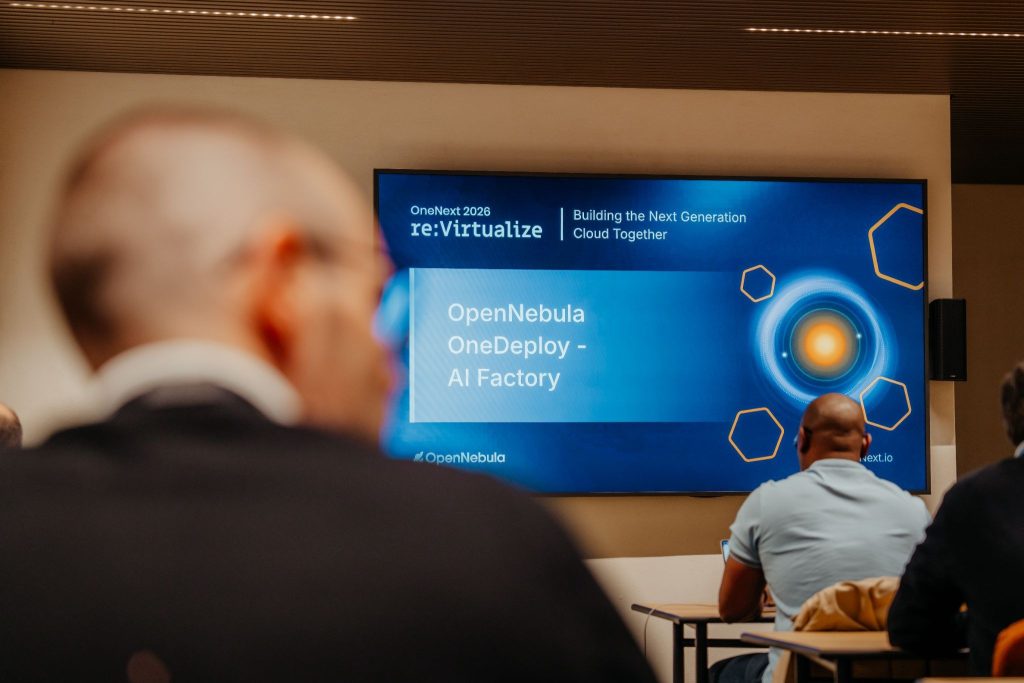
The event opened with a strong focus on hands-on training, setting a highly practical tone from the start. Attendees participated in dedicated sessions covering Official OpenNebula Practitioner Training, automation and migration from VMware environments, and the deployment and operation of AI Factories with OpenNebula—offering participants practical knowledge and direct experience across key infrastructure challenges and emerging use cases.
These were not high-level overviews. They were intensive, guided sessions designed to accelerate real-world adoption. Participants gained deep, operational knowledge on deployment, configuration, automation, and infrastructure design, with direct access to experts through office hours and certification opportunities.
The takeaway was clear: organizations are not just exploring alternatives, they are increasingly open to them and actively learning how to build and migrate.
Looking to move beyond VMware? OpenNebula offers a cost-effective and open alternative designed to simplify operations, reduce vendor lock-in, and modernize enterprise cloud infrastructure with a practical migration path. Discover OpenNebula as an alternative to VMware here.
Day 2: Sovereign Enterprise Cloud Takes Center Stage
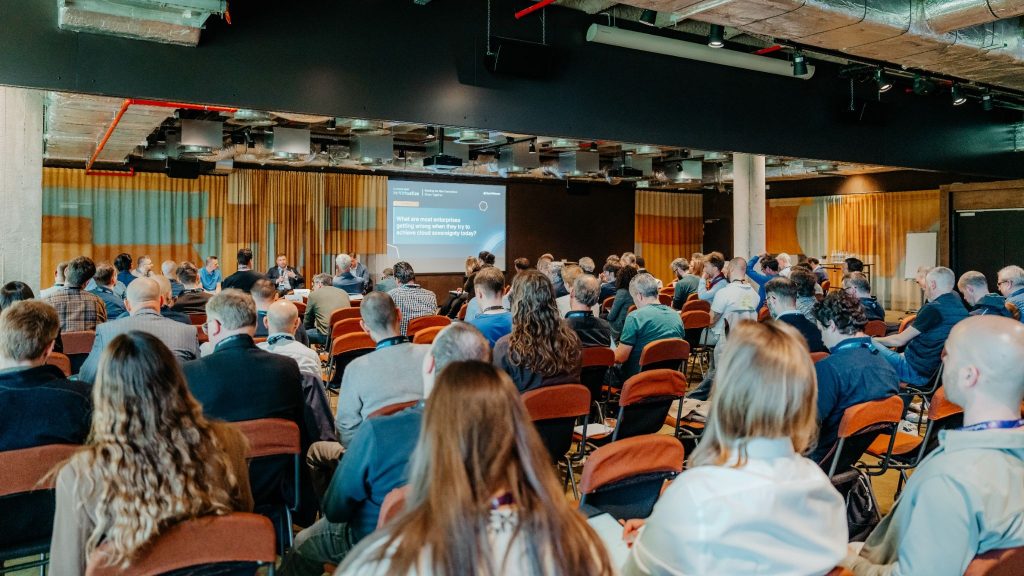
The main conference day opened with the OpenNebula keynote: The New Standard for Sovereign Enterprise Cloud. This set the strategic tone for the day, framing the shift toward open, sovereign, and cost-efficient cloud architectures through real-world adoption stories and VMware replacement strategies.
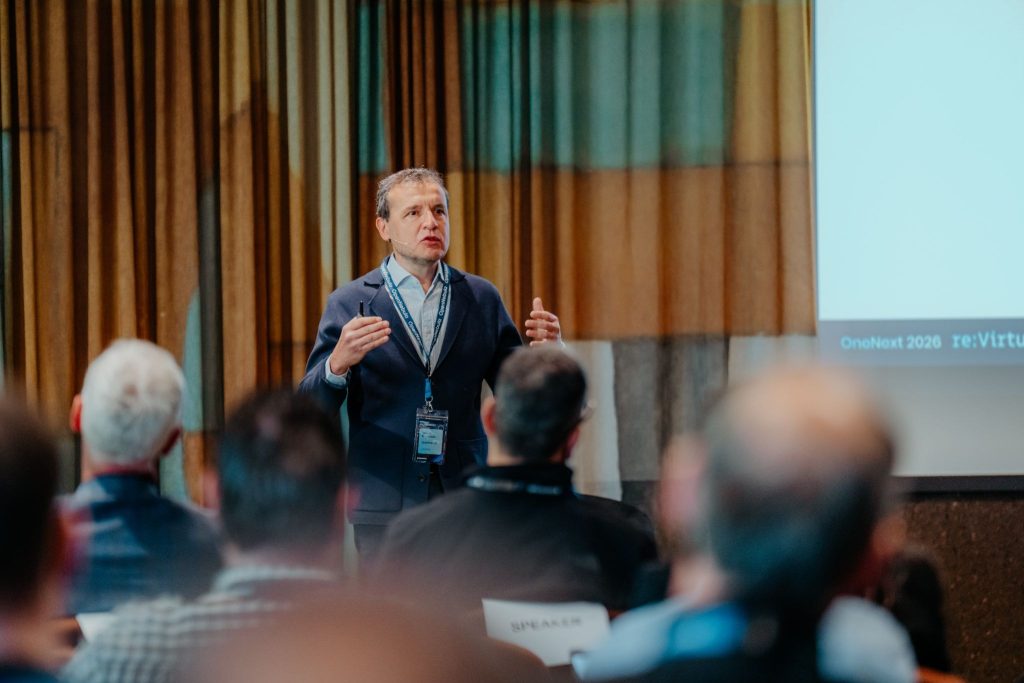
What followed was a dense, high-impact agenda that brought together cloud providers, enterprises, and technology partners across the ecosystem.
Cloud providers took the stage early. In sessions like Cloud Providers Powered by OpenNebula, companies such as BIT.nl, Dustin, and Iguane Solutions demonstrated how they are building sovereign and competitive cloud services. This was complemented by Cloud Providers Delivering Sovereign Solutions, where Exoscale, i3D.net, and OVHcloud,shared insights into balancing independence, performance, and operational complexity.
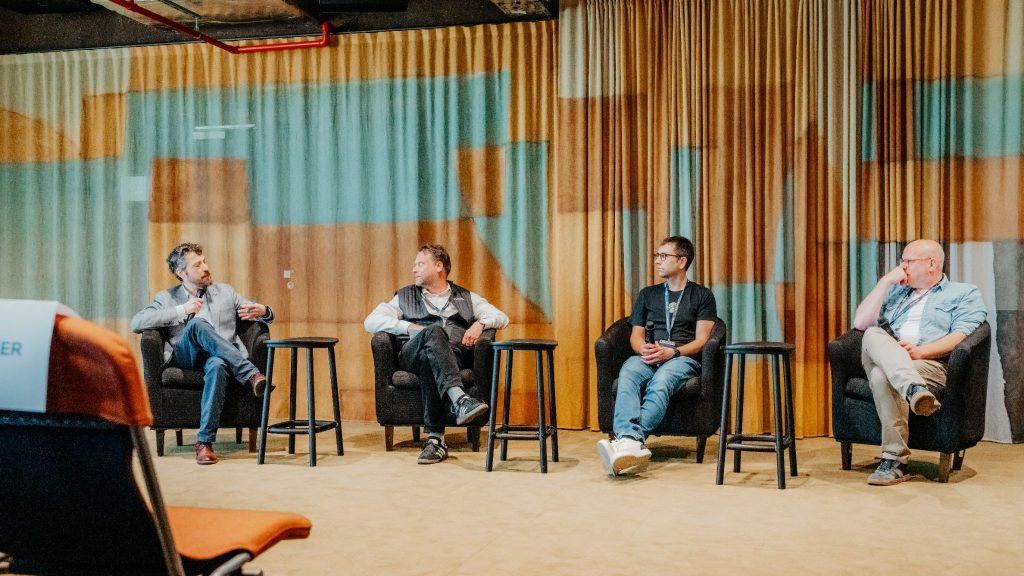
The enterprise perspective added depth to the sovereignty conversation. DB InfraGO showcased how strategic industries are implementing digital sovereignty through open technologies, while sessions on modernization—featuring Encore Tech, Ghent University, and the Olympic Channel—highlighted practical approaches to moving away from legacy infrastructure.
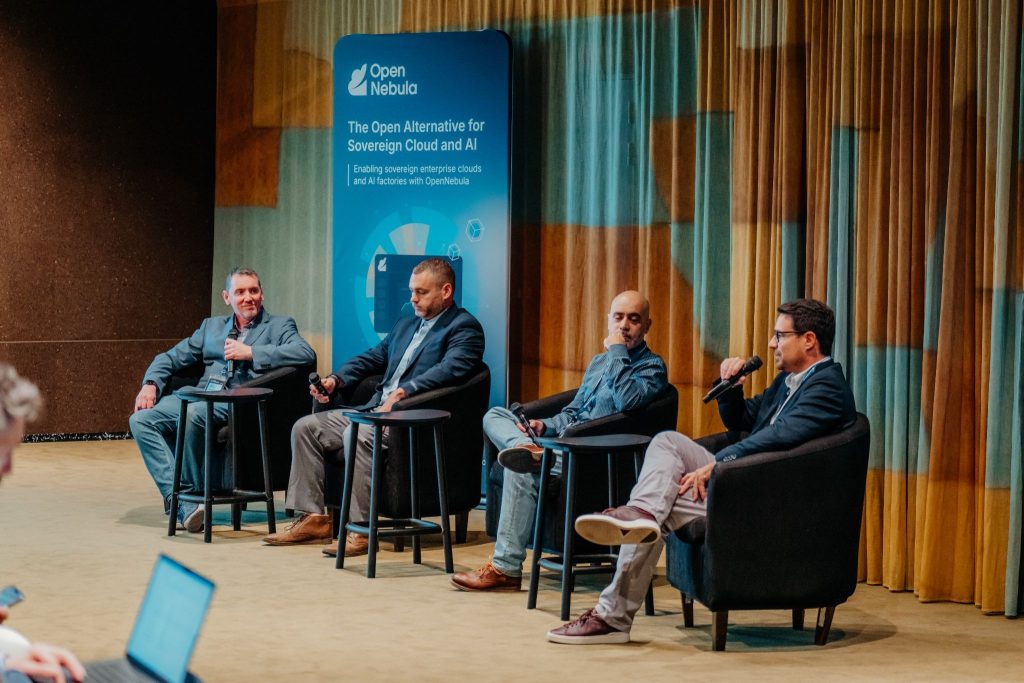
Telco and public sector voices reinforced the broader geopolitical and regulatory context. The session on sovereign telco infrastructure brought together the A1, European Commission, Infobip, and Orange, emphasizing the role of open platforms in enabling 5G edge and next-generation telecom services.
A strong ecosystem presence underpinned the entire day. Sessions featuring NetApp and TrueFullstaq, as well as Encore Tech and Veeam explored real-world implementations of storage, backup, and disaster recovery in modern cloud environments. Discussions on AI-driven storage—with contributions from Everpure, LINBIT, NetApp and VAST Data—highlighted how emerging workloads are already reshaping infrastructure requirements.
Additional technical depth came from sessions like Ghent University and Red Hat on production-grade cloud environments, and TrueFullstaq’s deep dive into qcow caching performance. Meanwhile, initiatives such as Project Sylva, presented with Orange, and the DE-CIX multi-cloud PoC showcased the growing importance of open collaboration and federated infrastructure models in Europe.
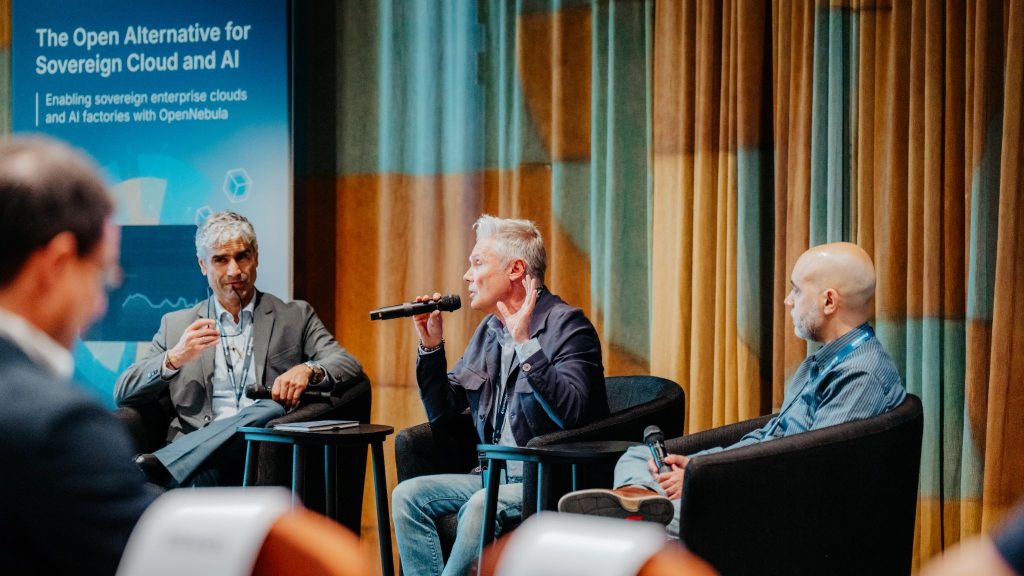
The day wrapped up with closing remarks and extended networking, where conversations continued across cloud providers, enterprises, and partners—turning shared challenges into collaborative opportunities.
Day 3: Scaling the Future with Sovereign AI Factories
The final day shifted decisively toward the future of infrastructure: AI factories at scale.
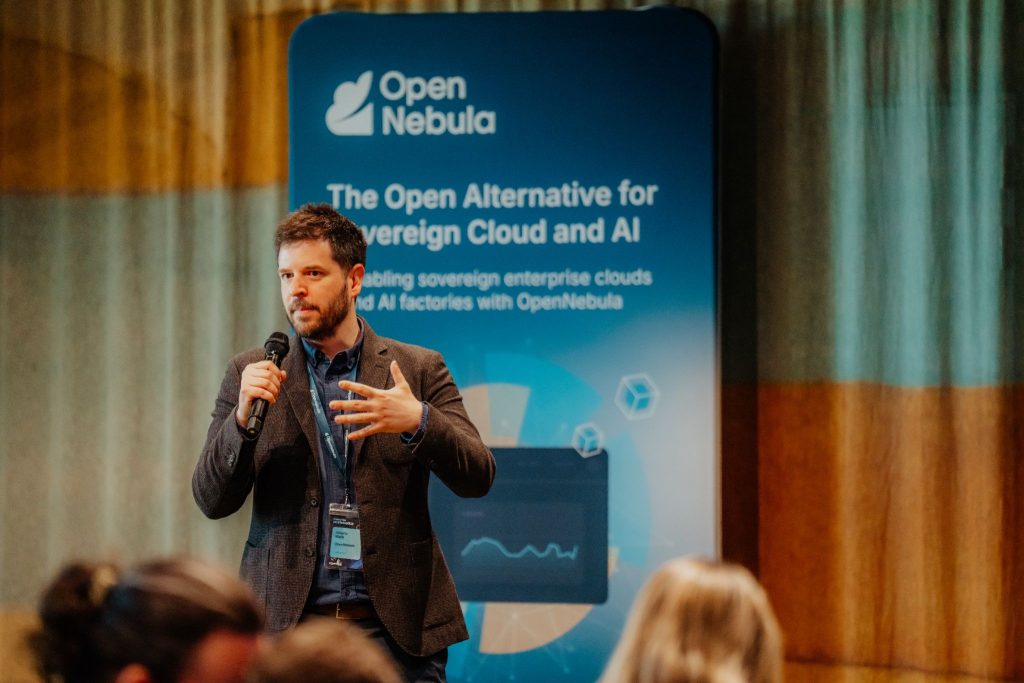
It opened with the OpenNebula keynote: Building Sovereign AI Factories with OpenNebula.
This session outlined OpenNebula’s latest capabilities for AI workloads. The direction is clear—AI factories are becoming foundational infrastructure, and sovereignty will define how they are designed, deployed, and interconnected.
This momentum is further reinforced by OpenNebula’s leadership in the IPCEI-CIS initiative, where the platform is playing a central role in advancing next-generation cloud and edge infrastructure. By contributing to large-scale, cross-border innovation efforts, OpenNebula Systems is helping translate the vision of digital sovereignty into concrete, deployable technologies—positioning itself as a key enabler of digital transformation.
The agenda then expanded into a comprehensive exploration of the AI ecosystem.
The hardware landscape was tackled from both global and European perspectives. In AI Hardware Platform Providers: The Existing Ecosystem, companies like Arm, Fsas Technologies (Fujitsu), NVIDIA and Supermicro examined current capabilities and scaling challenges. This was followed by AI Hardware Providers: The EU Next Generation, where Axelera, Kalray, Openchip, and Semidynamics, highlighted Europe’s ambition to build a competitive, sovereign hardware stack.
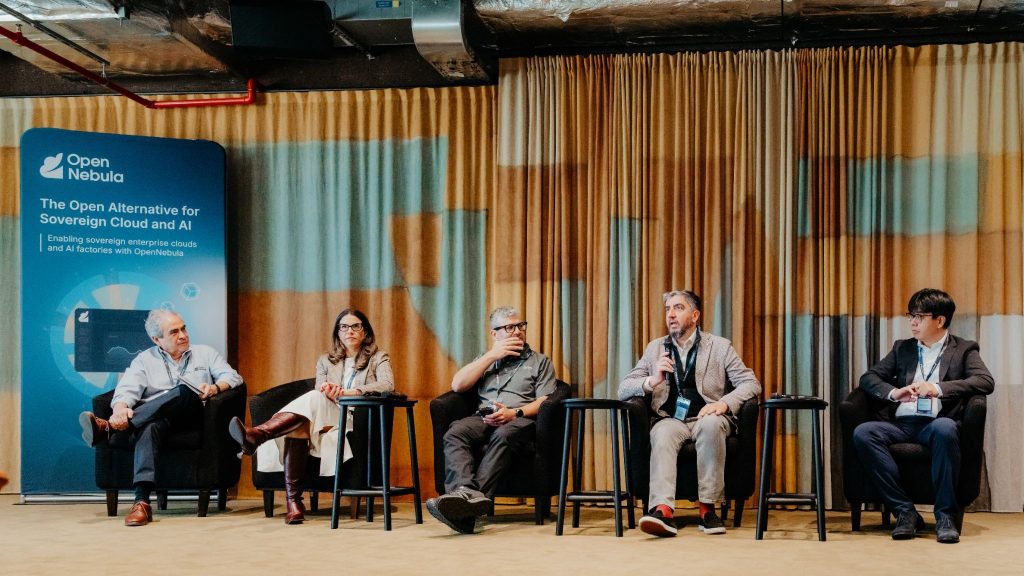
On the software side, AI Infrastructure Software Platforms brought together Canonical, HashiCorp, Red Hat and SUSE, focusing on how platforms are evolving to support increasingly complex AI workloads across hybrid and distributed environments.
One of the most forward-looking discussions came from the Federated & Distributed AI panel, where E-Group and Villanova.ai explored the challenges of enabling inference and fine-tuning across decentralized infrastructure, along with the growing relevance of agentic AI models operating beyond centralized systems.
The conversation then moved to scale and deployment. In Infrastructure Providers & AI Gigafactories, participants including CI Task, CloudFerro, Detecon and the Polish Ministry of Digital Affairs, discussed how Europe is positioning itself to scale AI capabilities through federated infrastructure and the emerging concept of AI gigafactories.
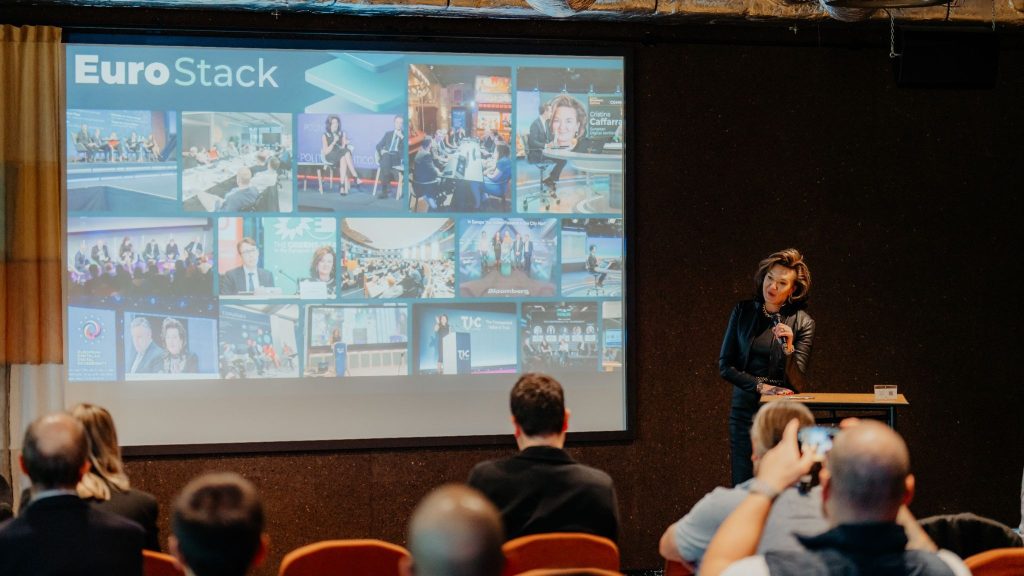
The event concluded with a keynote from EuroStack: What Sovereignty Is Achievable in Cloud and Artificial Intelligence, a fitting close that connected technology, policy, and market realities—grounding the broader vision of sovereignty in practical terms.
Ready to build sovereign, AI-ready infrastructure? Discover how OpenNebula enables secure, scalable, and vendor-neutral AI Factories designed for HPC centers, neoclouds, and telcos. Explore the platform powering the next generation of AI infrastructure. Learn more about OpenNebula AI Factories here.
Key Takeaways
Across the three days, OneNext 2026 made one thing clear: the infrastructure landscape is undergoing a structural shift. Organizations across sectors are actively moving away from legacy virtualization platforms, not only to optimize costs but to regain control over their infrastructure stack. VMware replacement is no longer a future consideration; it is a present-day priority, supported by a growing ecosystem and validated through real-world deployments.
At the same time, sovereignty has firmly established itself as a defining requirement, particularly across Europe. What was once a strategic ambition is now influencing concrete technology decisions at every level—from cloud providers and enterprises to public institutions. This shift is happening in parallel with the rapid acceleration of AI, which is fundamentally reshaping infrastructure needs. From specialized hardware and evolving software platforms to federated and distributed architectures, AI is driving a new wave of innovation—and complexity.
What emerged from Brussels is a clear and consistent direction: open, sovereign, and AI-ready infrastructure is becoming the new standard. And just as importantly, it is being built collaboratively—through a strong and expanding ecosystem that is already turning this vision into reality.
Looking Ahead
OneNext 2026 was more than an event: it was a clear indicator of where the industry is heading.
From hands-on training to high-level strategy, the conversations in Brussels reflected a market in transformation—one where organizations are actively rethinking their infrastructure stack to meet the demands of sovereignty, scalability, and AI.
And OpenNebula is positioning itself right at the center of that shift.
Funded by the Spanish Ministry for Digital Transformation and Civil Service through the ONEnextgen Project (UNICO IPCEI-2023-003), and co-funded by the European Union’s NextGenerationEU through the RRF.

0 Comments